What Are the Best Precision Surgical Instruments?
Choosing the best Precision surgical instruments requires more than comparing prices, finishes, or catalog photographs. In an operating room, a needle holder must close smoothly, a forceps tip must meet evenly, and a microsurgical handle must remain stable under pressure. Small defects can become visible during delicate tissue handling.
Market research shows why this decision deserves careful review. Grand View Research reported that the global surgical instruments market was valued at approximately USD 14.9 billion in 2023. Its analysis also projects continued growth through 2030, driven by minimally invasive procedures, advanced materials, and hospital replacement demand. Fortune Business Insights similarly identifies reusable and disposable instrument systems as important market segments. These figures describe expansion, not automatic quality.
Dr. Atul Gawande, a surgeon and patient-safety authority, wrote, “We have trained, hired, and rewarded people to be cowboys. But the complexity of medicine has made a different kind of work necessary: the work of a pit crew.” His observation applies directly to instrument selection. Precision depends on coordinated teams, consistent maintenance, and measurable performance. The best instrument may be titanium, stainless steel, or a specialized alloy. It depends on the procedure.
This guide examines tip alignment, ergonomic balance, corrosion resistance, sterilization compatibility, traceability, and manufacturer support. It also considers surgeon experience, because laboratory specifications cannot capture every grip or tactile response. No ranking is perfect. A polished surface may hide weak engineering. A costly instrument may still feel wrong in the hand. Reliable choices require evidence, clinical feedback, and honest reassessment.
What Defines a Precision Surgical Instrument?
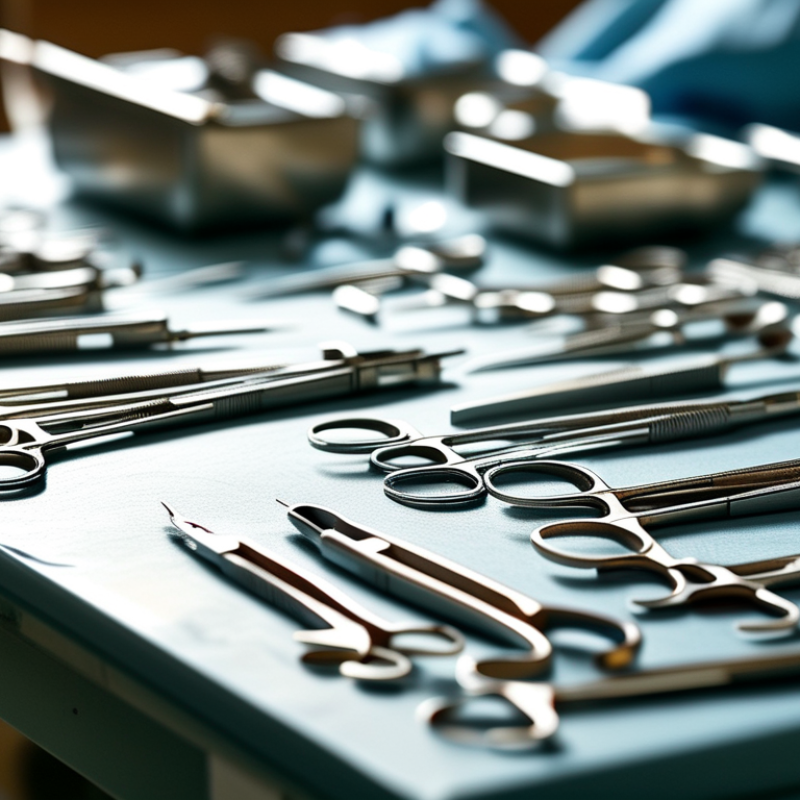
A precision surgical instrument is defined by controlled performance, not appearance. Its working ends must meet accurately, with minimal lateral play. A needle holder should grip without crushing delicate material. A micro-scissor should close smoothly across its full cutting length. Small details matter. The hinge must move without stiffness or sudden looseness. The handle should remain stable in a gloved hand, even when moisture reduces friction. These qualities support measured, repeatable surgical movements.
Material selection also defines precision. Surgical-grade metal should resist corrosion, deformation, and repeated sterilization cycles. The surface needs careful finishing, because tiny scratches can affect cleaning and movement. Weight and balance matter too. An instrument that feels heavy at the tip may increase hand fatigue during a long procedure. Clear markings and traceable inspection records add reliability. Quality control should test alignment, jaw pressure, cutting action, and closure consistency before use.
The best instrument is not always the sharpest or most expensive. It must match the procedure, tissue, and handling technique. A tool can perform well yet feel unsuitable in another clinician’s hand. That difference deserves attention. No instrument remains perfect forever. Repeated impact, heat, and cleaning gradually change its behavior. Regular inspection can reveal a loose hinge, uneven tips, or reduced grip before these flaws affect controlled use. Sometimes, the smallest defect deserves the earliest response.
Which Surgical Instruments Offer the Greatest Accuracy?
What Are the Best Precision Surgical Instruments?
Which Surgical Instruments Offer the Greatest Accuracy?
The most accurate surgical instruments support controlled movement, clear visualization, and consistent tissue handling. Fine micro-forceps, needle holders, scissors, and retractors should have balanced weight and smooth joints. Their tips must meet evenly, without lateral play. A 2008 Lancet study, supported by the World Health Organization, estimated 234 million major operations occur worldwide each year. It also reported about seven million disabling complications. These figures do not prove that one instrument is superior, but they show why reliable control matters.
In practice, accuracy depends on more than sharp edges. Inspectors should check jaw alignment under magnification, test ratchet resistance, and record calibration for powered or measuring devices. ISO 13485 promotes documented quality controls across medical-device production. Reprocessing also matters; repeated cleaning cycles can affect hinges, insulation, and surface finish. No instrument stays perfectly precise forever. That assumption is risky. A small grip imbalance may become visible only during delicate suturing, when correction is difficult.
Tips: Choose instruments by procedure, not appearance. Compare tip closure, tactile feedback, and handle balance. Keep inspection records. Replace damaged components promptly. The WHO Safe Surgery guidance also emphasizes equipment readiness, because a technically excellent instrument cannot compensate for poor preparation. A practical trial with experienced clinicians remains valuable, although personal preference can introduce bias. Accuracy should be measured, observed, and reviewed over time.
How Materials and Design Affect Instrument Precision
What Are the Best Precision Surgical Instruments?
How Materials and Design Affect Instrument Precision
Precision begins with the material beneath the polished surface. Surgical stainless steel offers strength, corrosion resistance, and predictable sharpening. Its hardness must be balanced carefully. Excessive hardness can improve edge retention but may increase brittleness during repeated use. Titanium is lighter and highly corrosion resistant, yet it can feel less rigid during delicate manipulation. In practice, that difference appears when a surgeon closes a fine needle holder with minimal force.
Design controls how material becomes usable precision. Balanced instruments reduce wrist fatigue and help maintain a stable grip. Narrow jaws improve visibility in deep fields, while finely matched tips prevent tissue slipping. A misaligned tip may look minor under inspection, but it can create uneven pressure across a fragile vessel. Small errors matter.
The World Health Organization’s Global Patient Safety Action Plan 2021–2030 reports that approximately one in ten patients experiences harm during healthcare, with more than half considered preventable. Instrument performance is only one factor, but it deserves serious attention. Standards such as ISO 7153-1 guide material selection for surgical instruments, while AAMI ST79 emphasizes cleaning, inspection, and sterilization practices. Those steps affect precision more than many purchasing teams expect.
A practical inspection should check jaw alignment, joint smoothness, surface damage, and closing force. Not every “premium” finish improves control. That assumption needs questioning. A mirror surface may hide microscopic wear, and repeated reprocessing can gradually change movement. Better decisions combine measured performance, clinician experience, and documented maintenance results.
What Are the Best Precision Surgical Instruments?
How Materials and Design Affect Instrument Precision
Young’s modulus indicates a material’s resistance to elastic bending. Under the same load and geometry, a higher value generally supports better dimensional stability and more precise movement. Tungsten carbide and alumina ceramic are substantially stiffer than titanium alloy, while stainless steel provides a balanced combination of stiffness, toughness, corrosion resistance, and manufacturability.
Representative room-temperature Young’s modulus values in gigapascals (GPa). Actual values vary with grade, composition, heat treatment, porosity, and instrument design. Reference basis: commonly published engineering material-property ranges and ASTM E111 testing conventions.
How Surgeons Select Instruments for Different Procedures
What Are the Best Precision Surgical Instruments?
Surgeons select instruments according to the procedure, tissue type, and working space. A delicate vascular repair needs fine, atraumatic forceps and a needle holder with controlled jaw movement. Bone procedures require stronger instruments with stable handling. The “best” choice changes with the task. It is never just about sharpness.
During open surgery, surgeons often compare tip shape, shaft length, grip comfort, and tactile feedback. Fine scissors may separate fragile tissue, while blunt dissecting tools can reduce accidental damage. In minimally invasive procedures, long shafts and angled tips must match the access route. The surgeon also considers visibility, hand fatigue, and instrument balance. Small details matter.
Room conditions matter too. Instruments must withstand validated sterilization processes and remain functional after repeated use. The surgical team checks alignment, jaw closure, insulation, and surface damage before the procedure. An instrument can look clean yet perform poorly. That risk deserves attention. Experienced teams also use procedure-specific trays, but fixed sets are not perfect. A standard tray may contain unnecessary tools or miss a specialized option. Careful review after each case can improve future selection. Surgeons may test unfamiliar instruments in simulation, then reassess their choice during real clinical work. A lighter handle feels better at first, but it may offer less control. Precision comes from fit, performance, training, and honest evaluation.
How to Maintain and Assess Surgical Instrument Performance
What Are the Best Precision Surgical Instruments?
The best precision surgical instruments are not judged by appearance alone. Their value depends on consistent performance, safe handling, and measurable reliability. A sharp needle holder should grip securely without damaging delicate material. Small defects matter. In a busy sterile processing area, trained staff should inspect every instrument after use. Look for bent tips, loose joints, surface corrosion, and unusual stiffness. A clean, bright inspection lamp can reveal marks that ordinary room lighting hides.
Use a validated cleaning process with the correct detergent, water quality, and contact time. Rinse thoroughly. Residue can affect movement and sterilization. Hinges should move smoothly, without forcing them. Scissors should cut test material evenly from the tip to the joint. Graspers should close symmetrically. Powered instruments require checks for cables, insulation, controls, and battery condition. These results should be recorded, not remembered. Sterilization must follow current instructions, facility procedures, and applicable infection-control requirements.
A simple performance log improves accountability. Record the instrument’s identification, inspection date, observed defect, repair decision, and return date. Review repeated failures. If one clamp repeatedly loses alignment, remove it from service and investigate the cause. This is where many systems become imperfect. Minor stiffness may be overlooked when schedules tighten. That habit needs correction. Staff training should include supervised practice, clear escalation rules, and periodic competency checks. Independent audits can expose weak steps, especially when records appear complete but actual inspections are rushed.