Lumbar spine solutions are attracting greater attention as aging populations and chronic back pain increase demand for dependable care. The World Health Organization reported that low back pain affected about 619 million people in 2020. Its 2023 fact sheet, drawing on Global Burden of Disease estimates, projects 843 million cases by 2050. The burden is substantial. Yet prevalence alone does not predict demand for spinal implants: many patients do not need surgery, and treatment decisions require qualified clinical assessment.
For global buyers, China can be a sourcing option across spinal implants, instruments, and related manufacturing services. But “top” should mean verifiable performance, not simply a low quotation or a polished catalog. Buyers should examine product specifications, material traceability, manufacturing controls, sterilization records, and evidence supporting intended use. ISO 13485 certification can indicate a quality-management framework; it does not, by itself, prove clinical benefit or authorize a product in every market. Requirements differ by destination, so regulatory status should be checked with the relevant authority.
Details matter. A clearly labeled implant tray, consistent lot records, and responsive technical support can affect procurement and follow-up. Reports from the WHO describe the public-health burden, not the comparative quality of suppliers. That distinction is easy to miss. This guide introduces practical criteria for comparing China-based Lumbar spine solutions, while recognizing that supplier claims need independent review. No shortlist replaces clinical judgment, regulatory checks, or a careful assessment of long-term reliability.
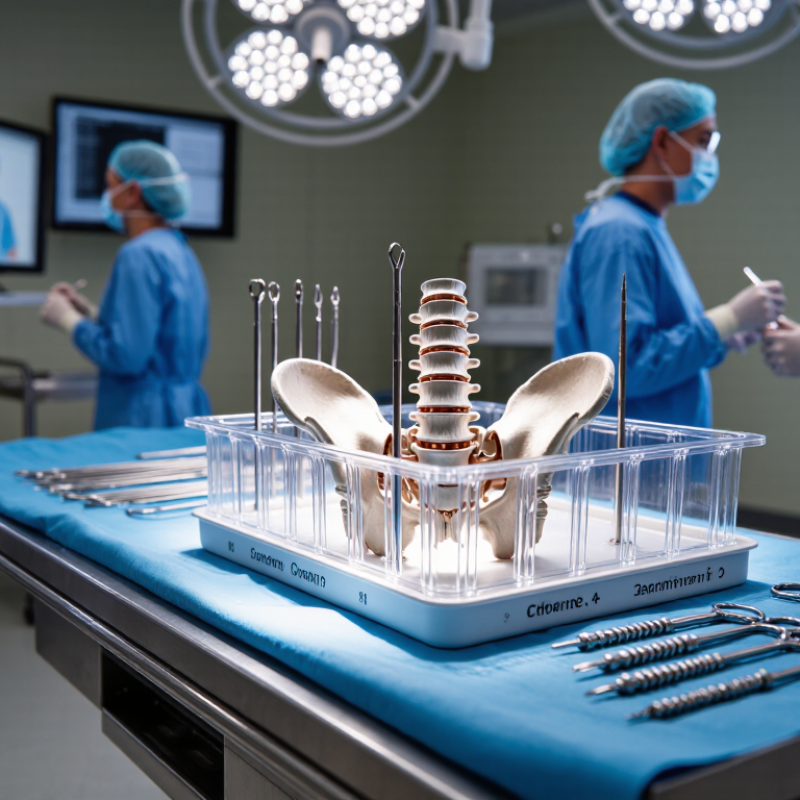
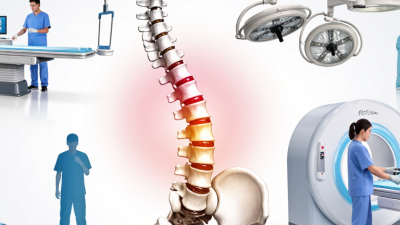
Lumbar spine solutions address problems affecting the lower back, nerves, and spinal stability. Treatment may begin with physical therapy, medication, or activity changes. Surgery is considered when symptoms persist or nerve compression causes significant weakness. Imaging matters, but it should be read alongside the patient’s symptoms and examination.
Different procedures serve different clinical needs.
Decompression removes bone or soft tissue that presses on a nerve, often helping with leg pain or numbness. Spinal fusion joins selected vertebrae to limit painful movement or restore stability. For carefully chosen patients, artificial disc replacement preserves motion at one level. These options are not interchangeable. Anatomy, bone quality, overall health, and daily activity all influence suitability.
Details matter. A surgeon may review implant dimensions, material records, and compatibility with the planned procedure. Buyers assessing clinical solutions should also examine reliable evidence, traceability, and clear technical documentation. The strongest-looking specification is not always the best fit. Follow-up is essential: recovery varies, and implants do not guarantee pain relief. Even good plans need adjustment.
Main Categories of Lumbar Spine Products Made in China
China-made lumbar spine products commonly include fixation systems, interbody devices, and surgical instruments. Posterior pedicle-screw-and-rod systems stabilize vertebrae; screw dimensions and rod contour should match the intended procedure. Interbody cages, often made from titanium or PEEK, fit between vertebral bodies and support fusion. Some manufacturers also produce expandable cages, connectors, bone-graft substitutes, and insertion tools. Demand is broad.
The Global Burden of Disease Study 2021, published in The Lancet Rheumatology, estimated that 619 million people had low back pain in 2020. It projected 843 million by 2050. These figures describe disease burden, not implant sales. Buyers should check material specifications, dimensional tolerances, sterilization records, and traceability for each product. Ask for clear compatibility tables; catalog descriptions can be vague. One limitation is that product categories overlap, and a polished catalog cannot prove clinical performance. Request test methods and validation documents, then confirm that the intended use matches the product’s technical documentation.
| Product Category | Common Product Types | Typical Materials | Common Surgical Use | Key Buyer Checks |
|---|---|---|---|---|
| Pedicle Screw and Rod Systems | Pedicle screws, connecting rods, set screws, cross-connectors, and related fixation components | Titanium alloy; some systems also use cobalt-chromium alloy rods | Posterior fixation and stabilization of the lumbar spine, often as part of a fusion procedure | Confirm screw dimensions, rod compatibility, locking mechanism, instrument set, and applicable regulatory documentation |
| Interbody Fusion Cages | TLIF, PLIF, ALIF, and lateral interbody cages; available in different footprints, heights, and angles | PEEK, titanium, or titanium alloy; some designs incorporate radiographic markers or porous surfaces | Placement in the disc space to support interbody fusion; approach depends on the cage design and surgical plan | Check approach-specific design, size range, material specifications, imaging visibility, and compatibility with insertion instruments |
| Spinal Decompression Instruments | Rongeurs, curettes, nerve-root retractors, osteotomes, and other lumbar surgical instruments | Commonly surgical stainless steel; handles and other components vary by design | Used by surgical teams during procedures such as decompression and discectomy | Review instrument dimensions, reusable-device instructions, cleaning and sterilization guidance, and set contents |
| Vertebral Augmentation Devices | Bone cement delivery systems and, for selected procedures, balloon-based kyphoplasty instruments | Delivery instruments are commonly metal and polymer components; bone cement is commonly PMMA-based | Used in vertebral augmentation procedures for selected vertebral compression fractures; this is distinct from lumbar fusion fixation | Verify intended indication, cement specifications, delivery-system compatibility, and market-specific authorization |
| Interspinous Spacers | Implantable devices placed between adjacent spinous processes, with designs varying by intended use | Design-dependent materials may include titanium alloy or medical-grade polymers | Used in selected cases to limit extension at a spinal level; indications vary by device and jurisdiction | Confirm the authorized indication, anatomical sizing, implantation instruments, and clinical evidence for the target market |
| Artificial Lumbar Disc Devices | Motion-preserving disc replacement implants with design-specific endplates and bearing components | May include metal alloys and polymer bearing materials, depending on the device design | Disc replacement for carefully selected patients; not interchangeable with fusion cages | Check the precise indication, regulatory status in the destination market, sizing options, and supporting clinical data |
Buyer note: Product availability and specifications vary by manufacturer. Confirm the applicable product registration or authorization, quality-system documentation, material certificates, sterilization details, and destination-market requirements before purchasing. ISO 13485 certification relates to a quality management system and is not, by itself, product approval.
Lumbar spine solutions depend on more than a strong implant. Titanium alloys offer high strength and established use in spinal fixation, while PEEK cages provide radiolucency that can help clinicians assess bone changes on imaging. Some designs combine materials, such as a PEEK body with a titanium surface. No material is perfect. Surface texture, stiffness, and imaging needs all involve trade-offs that a product sheet may understate.
Design details matter in use. A cage’s footprint, height, and teeth affect how it fits between vertebrae; screw geometry and rod compatibility shape fixation options. Manufacturing quality supports these features. CNC machining can produce precise interfaces, while additive manufacturing can create porous structures intended to encourage bone integration. But the process alone proves little. Buyers should review material certificates, dimensional inspection records, surface-finish controls, and batch traceability. Ask how the supplier validates cleaning and sterilization processes, too. These checks can reveal gaps before shipment, though paperwork is not a substitute for independent technical review. Even experienced teams can miss small inconsistencies. A thread that feels rough, or a dimension that drifts slightly, deserves investigation before a device enters clinical evaluation.
Representative elastic modulus of materials used in or relevant to lumbar interbody implants
PEEK is valued for its relatively low stiffness and radiolucency; titanium alloys offer strength and can be additively manufactured with porous features to support bone ingrowth; cobalt-chromium alloys are highly stiff and are more commonly used in spinal instrumentation. Values are approximate typical bulk-material figures, not device-specific measurements. Actual properties vary by grade, processing, and implant design.
Global buyers should evaluate lumbar spine suppliers on evidence, not catalogue claims. The World Health Organization’s 2023 low back pain fact sheet reports that 619 million people experienced low back pain in 2020, with cases projected to reach 843 million by 2050. This signals substantial clinical need, but it does not prove that any particular implant or instrument is effective. Buyers should match each product’s intended use to its technical file and available clinical evidence.
Request current quality-system documentation, product-specific registrations for the destination market, and traceability records for materials and finished devices. Check implant dimensions, material specifications, fatigue-test methods, sterilization validation, and packaging integrity. ISO 13485 certification is useful, but it is only one part of supplier assessment. Ask how production changes are controlled and how nonconforming batches are investigated. Small details count.
Where possible, compare samples with drawings and inspection records, then audit the facility or use an independent technical reviewer. Ask for realistic lead times, batch-release records, and a clear process for handling complaints. A polished certificate folder is reassuring, but it cannot show whether production stays consistent over time. I would not treat a low price as proof of value; I would also avoid assuming that one successful sample represents every future batch.
The 2023 Global Burden of Disease analysis in The Lancet Rheumatology estimated that 619 million people had low back pain in 2020. It projected 843 million cases by 2050. For global buyers, this demand makes reliable sourcing important, but volume should never replace evidence. A low-cost quote means little without clear product specifications and traceable manufacturing records.
Review the quality system, risk-management documentation, and device-specific test reports. ISO 13485 addresses medical-device quality management; ISO 14971 sets out a framework for managing medical-device risks. Ask suppliers for material certificates, sterilization validation where applicable, and lot-level traceability. Check that drawings, labels, and inspection records match the product being purchased. Details matter. A polished certificate alone is not enough; verify its scope and validity with the issuing body.
Regulatory checks vary by destination, device classification, and intended use. Confirm local registration requirements with qualified regulatory specialists before placing an order. During supplier assessment, inspect how incoming materials are controlled and how nonconforming parts are handled. Request sample records from a real production lot, not only presentation slides. Keep records. Remote audits can miss practical issues, such as inconsistent packaging controls or unclear change notifications. Buyers should also agree on complaint handling, delivery documentation, and post-market communication before shipment. This work takes time, and even careful reviews cannot remove every risk.