L-Carnitine Powder has become an important ingredient in sports nutrition, dietary supplements, and functional food manufacturing. Its appeal is practical: a fine, free-flowing powder can be measured, blended, and packed efficiently. Market research from Grand View Research, Fortune Business Insights, and IMARC Group indicates steady global growth in the broader L-carnitine market, supported by rising fitness participation and demand for performance-focused nutrition. However, market figures differ because researchers use different product definitions and regional coverage.
This article examines the Top 10 L-Carnitine Powder Manufacturers Worldwide. The selection considers manufacturing capacity, product consistency, quality certifications, technical support, and international supply experience. Strong suppliers usually provide clear certificates of analysis, batch traceability, heavy-metal testing, microbiological results, and stability information. GMP and ISO systems matter. So does documentation.
A reliable manufacturer should also explain its raw-material origin, particle characteristics, assay method, and recommended storage conditions. A practical detail can reveal much: quality powder should arrive in sealed packaging, with readable batch numbers and moisture protection. Independent reports from MarketsandMarkets and Research and Markets also emphasize growing demand for transparent, science-led ingredient sourcing. Still, no ranking is permanently correct. Pricing changes, capacity expands, and certifications can expire. Buyers should verify current records directly, rather than trusting a polished website alone. That caution may sound obvious, yet it is often missed.
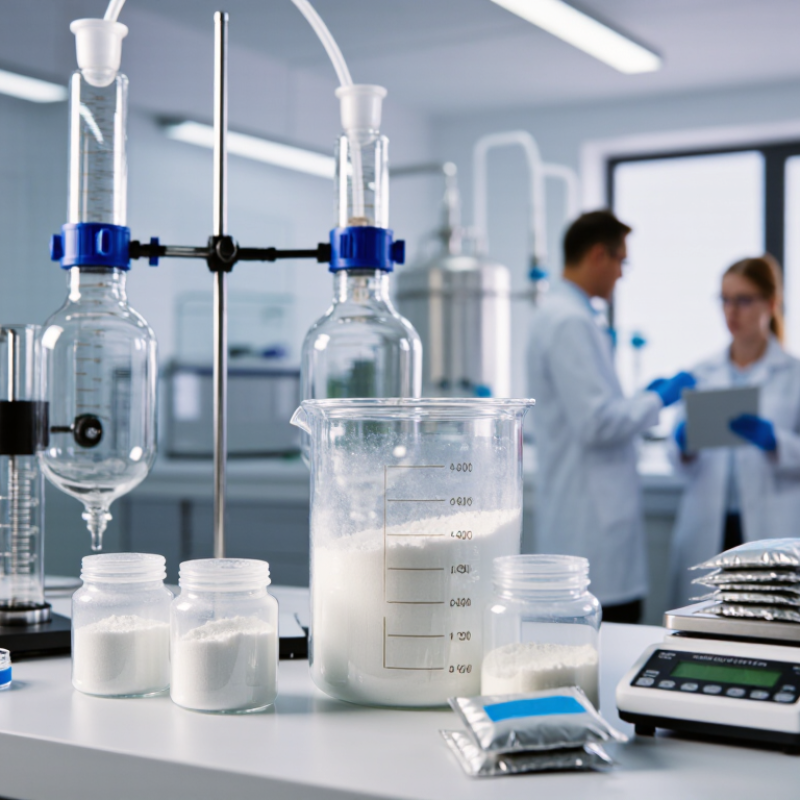
L-carnitine powder is a crystalline form of carnitine, a compound that helps transport long-chain fatty acids into mitochondria. The body produces it mainly in the liver and kidneys. Red meat and dairy also provide dietary carnitine. According to the NIH Office of Dietary Supplements, healthy adults usually synthesize enough carnitine without supplementation.
Its uses are more specific than many advertisements suggest. Manufacturers formulate the powder into capsules, drinks, nutrition blends, and clinical products. The International Society of Sports Nutrition reports that daily doses of 1.4–3 grams, taken with carbohydrates for several months, may increase muscle carnitine storage. However, evidence for faster fat loss remains inconsistent. Exercise performance benefits also vary between individuals. Not every scoop creates a noticeable change.
Quality control matters. Responsible production should verify identity, assay strength, microbial limits, residual solvents, and heavy metals through documented testing. A certificate of analysis helps, but it does not replace independent verification. The NIH notes that 1–3 grams daily may cause nausea, abdominal discomfort, diarrhea, or a fish-like odor. People with kidney disease, seizure disorders, or prescribed treatment should seek medical advice before use. The evidence is useful, but not flawless. Marketing often sounds more certain than the research.
Evaluating top global L-carnitine powder manufacturers requires more than comparing prices or catalog size. Experienced buyers examine production records, testing systems, and long-term consistency. A reliable manufacturer should provide clear specifications for purity, moisture, particle size, and chemical identity. Independent laboratory testing adds useful confidence. It can also reveal problems hidden by attractive certificates.
Manufacturing controls matter every day. Auditors should review hygiene procedures, batch records, equipment maintenance, and employee training. Facilities with recognized quality systems usually manage risks more consistently. Traceability is equally important. Each batch should connect to raw material records, processing dates, test results, and shipping documents. Stability data can show whether the powder remains suitable after storage in warm or humid conditions. Small details matter here.
Technical experience separates capable suppliers from simple traders. A skilled team can discuss solubility, flavor interaction, packaging barriers, and dosage-form requirements without vague promises. Customer references may support credibility, but they should not replace direct evidence. Some manufacturers present impressive documents yet provide limited answers about deviations or failed tests. That deserves careful questioning. No evaluation method is perfect. Even experienced buyers can overlook communication delays, changing raw material sources, or inconsistent sampling practices. A practical review should combine laboratory results, facility assessments, sample trials, and honest conversations with quality personnel. Price still matters, but it should not outweigh safety, transparency, or dependable batch performance.
The global Top 10 L-Carnitine Powder Manufacturers are best assessed by quality systems, production scale, testing depth, and supply consistency. Market estimates vary, but Grand View Research reported steady growth in the L-carnitine sector, supported by sports nutrition and dietary supplement demand. Future Market Insights also projects continued expansion through the decade, with Asia-Pacific remaining an important manufacturing region.
A reliable manufacturer should provide batch-specific certificates of analysis, identity testing, assay results, and microbiological data. ISO 22000 or HACCP-based controls are useful indicators. Independent testing for heavy metals and residual solvents adds practical confidence. Powder performance matters too. Particle size, moisture control, solubility, and packaging stability affect real production outcomes. Small details matter.
The strongest ten manufacturers typically demonstrate validated processes, transparent traceability, and documented export experience. Some offer standard L-carnitine powder, while others produce higher-purity grades for specialized formulations. USP quality guidance and international food-safety standards can support a more disciplined comparison. Still, rankings are not absolute. Public data can be incomplete, and impressive brochures do not replace an audit. Buyers should request recent samples, factory records, and three consecutive batch reports before choosing a long-term supplier. A careful review may feel slower, but it often prevents costly reformulation and delayed delivery.
This technical comparison uses molecular weight to distinguish commonly commercialized L-carnitine powder forms. It is manufacturer-neutral and does not represent company sales, production volume, or market share.
Molecular-weight values are calculated from the stated chemical composition and are useful for comparing powder forms during formulation, labeling, and procurement reviews.
L-carnitine powder quality begins long before filling a container. Reputable manufacturers operate under current Good Manufacturing Practices, with trained staff, hygienic rooms, and controlled equipment. GMP requires written procedures, batch records, deviation reviews, and documented corrective actions. It also expects raw materials to come from approved suppliers and meet defined specifications. Small details matter. A mislabeled drum can compromise an otherwise clean production line.
Food-safety systems such as HACCP and ISO 22000 help control biological, chemical, and physical hazards. Production teams should verify identity, assay, moisture, microbial limits, heavy metals, and residual solvents when relevant to the process. Testing methods need validation or verification, not casual visual checks. Independent laboratory testing can strengthen confidence, especially for high-volume orders. Yet a certificate of analysis is useful only when it matches the actual batch, method, date, and sample trail.
Traceability should connect incoming material to processing, packaging, storage, and shipment. Temperature and humidity records can reveal whether powder was protected from clumping and degradation. Stability studies support suitable shelf-life claims, although weak sampling plans may create false confidence. I would also review complaint handling, recall procedures, calibration logs, and audit findings. No single certificate proves quality. A careful buyer asks uncomfortable questions, compares specifications with test results, and checks whether the factory’s routine matches its paperwork.
How to Compare L-Carnitine Powder Manufacturers and Products
A credible comparison starts with product identity, not catalog size. L-carnitine, L-carnitine L-tartrate, and acetyl-L-carnitine serve different formulation needs. The NIH Office of Dietary Supplements notes that the body produces carnitine and obtains it from food, so dosage claims deserve careful review. Grand View Research’s 2024 market assessment projects roughly 5% annual growth for the global L-carnitine market through 2030. Growth can attract inconsistent suppliers.
Request a current certificate of analysis for every batch. Check assay results, identity testing, moisture, heavy metals, residual solvents, and microbiological limits. HPLC or equivalent validated methods provide stronger evidence than a simple specification sheet. Also examine the manufacturing site’s ISO 22000, HACCP, or GMP controls. A certificate alone is not proof. Trace the lot number from raw material to finished powder, then review storage temperature, packaging layers, and retest dates.
Price comparisons should use active content per kilogram, not only the quoted bag price. For example, a powder with lower assay may require more material during blending. Ask about particle size, solubility, odor, and caking after exposure to humidity. These details affect real production performance. I would also compare sample consistency across three batches, because one excellent sample can mislead. No checklist is perfect. Supplier transparency, responsive technical support, and independent testing often reveal more than polished sales documents.
| Rank | Anonymized Manufacturer Profile | Primary Product Form | Typical Assay / Purity | Free L-Carnitine Equivalent | Available Grade | Typical Particle Size | Quality Certifications Commonly Offered | Testing Documentation | Typical Commercial Pack Size | Indicative Lead Time | Best-Fit Application | Comparison Score |
|---|---|---|---|---|---|---|---|---|---|---|---|---|
| 1 | Supplier Profile 01 Large-scale international producer | L-Carnitine L-Tartrate | ≥99.0% by HPLC | Approximately 68%–70% | Food, sports nutrition, pharmaceutical-support grade | 80–200 mesh, customized options available | GMP, ISO 9001, HACCP, Halal, Kosher | Certificate of Analysis, heavy metals, microbiology, residual solvents | 10 kg, 20 kg, 25 kg fiber or HDPE drums | 3–6 weeks | Sports supplements, capsules, tablets, powdered drink mixes | 9.4 / 10 |
| 2 | Supplier Profile 02 Specialist amino-acid and nutrient manufacturer | Acetyl-L-Carnitine HCl | ≥98.0% by HPLC | Approximately 56%–60% | Nutrition and pharmaceutical-support grade | 60–100 mesh | GMP, ISO 22000, HACCP, Halal | Assay, identification, water content, chloride, microbial limits | 5 kg, 10 kg, 25 kg drums | 4–8 weeks | Capsules, tablets, cognitive-health formulations | 9.1 / 10 |
| 3 | Supplier Profile 03 High-volume contract ingredient producer | L-Carnitine Base | ≥97.0% by HPLC | Approximately 68%–72% | Food and dietary supplement grade | 40–80 mesh | GMP, FSSC 22000, ISO 9001, Halal, Kosher | CoA, allergen statement, GMO statement, stability data on request | 20 kg, 25 kg, 50 kg drums | 4–7 weeks | Ready-to-mix powders and liquid-product premixes | 8.9 / 10 |
| 4 | Supplier Profile 04 European-origin specialty manufacturer | L-Carnitine L-Tartrate | ≥99.0% by HPLC | Approximately 68%–70% | Premium sports nutrition and food grade | 100–200 mesh | GMP, ISO 22000, HACCP, Halal, Kosher, allergen-controlled | Batch CoA, traceability records, pesticide and contaminant testing | 10 kg, 20 kg, 25 kg bags or drums | 5–9 weeks | Premium branded formulations and export products | 8.8 / 10 |
| 5 | Supplier Profile 05 Flexible private-label ingredient partner | L-Carnitine Base L-Tartrate | ≥98.0% by HPLC | Approximately 65%–72% | Food and sports nutrition grade | 60–120 mesh | GMP, ISO 9001, HACCP, Halal | CoA, microbiological report, allergen and irradiation statements | 1 kg samples; 10 kg, 25 kg commercial packs | 2–5 weeks for standard items | Small and medium supplement brands | 8.6 / 10 |
| 6 | Supplier Profile 06 Cost-efficient bulk manufacturer | L-Carnitine L-Tartrate | ≥98.0% by HPLC | Approximately 68%–70% | Food and dietary supplement grade | 40–100 mesh | GMP, ISO 9001, HACCP, Halal | CoA and standard microbiology panel; expanded testing by request | 25 kg, 50 kg drums | 3–6 weeks | Large-volume powder blends and value-focused products | 8.3 / 10 |
| 7 | Supplier Profile 07 Specialty pharmaceutical-support producer | Acetyl-L-Carnitine HCl | ≥99.0% by HPLC | Approximately 56%–60% | Pharmaceutical-support and premium nutrition grade | 80–120 mesh | GMP, ISO 9001, ISO 22000, Halal, Kosher | CoA, elemental impurities, residual solvents, microbial limits | 5 kg, 10 kg, 25 kg drums | 6–10 weeks | High-specification capsules and tablets | 8.2 / 10 |
| 8 | Supplier Profile 08 Custom formulation and premix manufacturer | L-Carnitine L-Tartrate Custom Premixes | ≥98.0% active ingredient | Formula-dependent | Food, beverage, and sports nutrition grade | Customized for beverage dispersion | GMP, HACCP, ISO 22000, Halal | CoA, blend uniformity, solubility and dispersion data | 5 kg pilot batches; 20 kg, 25 kg production packs | 4–8 weeks | Functional beverages, sachets, and multi-ingredient blends | 8.0 / 10 |
| 9 | Supplier Profile 09 Regional distributor with qualified manufacturing sources | L-Carnitine Base L-Tartrate | Usually ≥98.0% by HPLC | Product-form dependent | Food and dietary supplement grade | Supplier specification dependent | ISO 9001, HACCP, Halal; certification varies by source | Batch CoA and supplier qualification package | 1 kg samples; 10 kg, 25 kg, 50 kg packs | 1–4 weeks when stocked | Short-lead-time purchasing and regional fulfillment | 7.8 / 10 |
| 10 | Supplier Profile 10 Small-batch specialty powder manufacturer | L-Carnitine L-Tartrate | ≥97.0% by HPLC | Approximately 68%–70% | Food and sports nutrition grade | 60–100 mesh | GMP, HACCP, ISO 9001, Halal where applicable | CoA, microbiology, heavy metals; additional tests on request | 1 kg, 5 kg, 10 kg, 25 kg packs | 2–6 weeks | Trial orders, emerging brands, and customized pack sizes | 7.6 / 10 |