China Top 10 Cervical Spine Devices Suppliers?

China’s cervical spine market is becoming more important as the population ages and surgical needs increase. China’s National Bureau of Statistics reported that people aged 60 and above represented 21.1% of the population in 2023. This demographic shift may support demand for spinal implants, fixation systems, and motion-preservation technologies.

Cervical spine devices require more than strong sales figures. They must demonstrate material safety, mechanical reliability, surgical usability, and consistent quality control. The World Health Organization estimates that musculoskeletal conditions affect approximately 1.71 billion people worldwide, showing the broad clinical burden behind spinal care. Meanwhile, industry analyses from Grand View Research and Fortune Business Insights indicate continued growth in the global spine implants and devices market, driven by degenerative disease, aging populations, and minimally invasive surgery.

This guide reviews ten leading Chinese suppliers of Cervical spine devices through public company information, product portfolios, regulatory records, manufacturing capabilities, and clinical visibility. Attention is given to cervical plates, screws, cages, artificial discs, and posterior fixation systems. NMPA registration remains an important reference point for products marketed in China, while ISO 13485 certification can indicate structured medical-device quality management.

No ranking is completely objective.

Company scale, hospital adoption, product depth, and international reach can change quickly. Public data also remain uneven, and some manufacturers disclose limited clinical outcomes. That limitation matters. Readers should verify current approvals, published evidence, surgeon feedback, and after-sales support before making procurement decisions. The following overview is therefore a practical market reference, not a substitute for clinical judgment or formal supplier due diligence.
China Top 10 Cervical Spine Devices Suppliers?

Cervical Spine Devices: Types, Uses, and Clinical Applications

Cervical Spine Devices: Types, Uses, and Clinical Applications

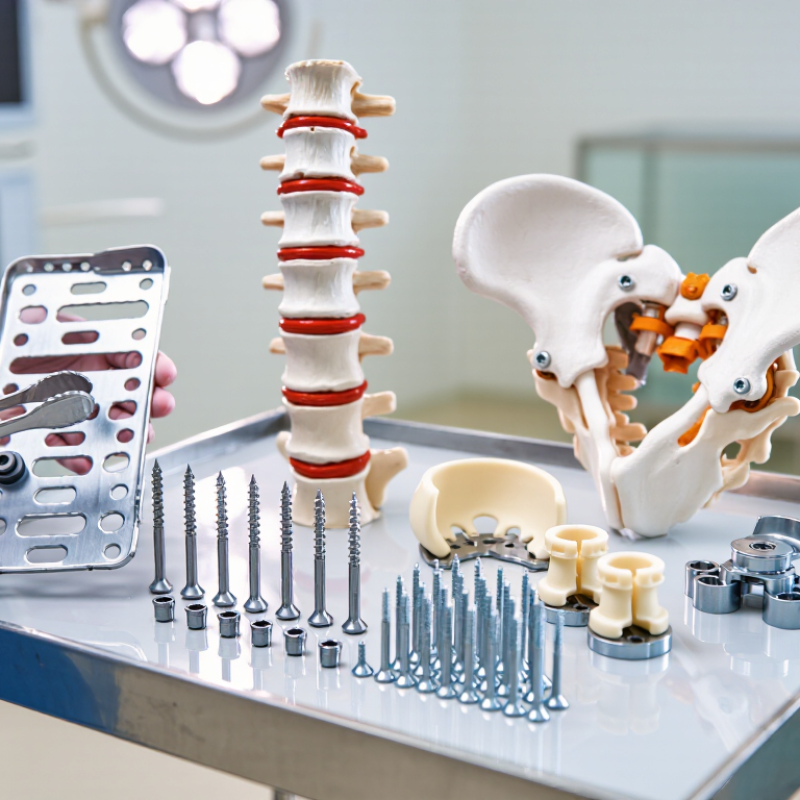
Cervical spine devices support treatment for disc degeneration, instability, fractures, deformity, and spinal cord compression. Common options include interbody cages, anterior plates, screws, posterior fixation systems, and artificial discs. Each device has a different mechanical purpose. Cages help restore disc height and encourage fusion. Plates improve stability after anterior surgery. Artificial discs aim to preserve motion in carefully selected patients.

Clinical application depends on symptoms, imaging, bone quality, and neurological findings. A painful disc level may require decompression and fusion, while selected patients may receive motion-preserving surgery. Posterior systems can support multilevel disease or complex instability. Device selection should also consider surgical access, implant material, radiographic visibility, and revision needs. No device fits every neck. That sounds obvious, yet rushed comparisons still happen.

Tips: Compare suppliers by documented quality systems, clinical evidence, traceability, sterilization controls, and surgeon training. Ask whether product data reflect real cervical cases, not only laboratory testing. Verify regulatory registration in the target market and review instructions for use carefully. Evidence can be uneven. Some claims may sound precise but need longer follow-up. A cautious evaluation is better than an impressive brochure. Surgeons should make final decisions through multidisciplinary assessment, informed consent, and patient-specific planning.

China’s Cervical Spine Device Supplier Market and Industry Structure

China Top 10 Cervical Spine Devices Suppliers?

China’s cervical spine device market is becoming more specialized and competitive. The supplier landscape includes implant manufacturers, precision machining companies, and medical distribution partners. Common products include cervical plates, interbody cages, screws, fixation systems, and artificial disc implants. Each category requires different clinical evidence, engineering controls, and surgical training.

The industry structure is not simply a ranking of ten factories. A reliable supplier should be assessed through product registration, quality management, material traceability, and post-market surveillance. Manufacturing sites often use titanium alloys, high-performance polymers, and automated inspection equipment. However, equipment alone does not prove clinical value. Hospital feedback, surgeon usability, and revision data deserve equal attention.

Small details matter. Thread accuracy matters.

Domestic suppliers increasingly compete through shorter delivery cycles, flexible product customization, and local technical support. Many also cooperate with hospitals during design refinement and clinical evaluation. This creates practical advantages, but it may introduce uneven documentation or inconsistent communication. Buyers should review sterilization records, batch controls, packaging integrity, and complaint-handling procedures before cooperation.

Market development remains shaped by regulatory review, public hospital procurement, and demand for cost-effective treatment. Regional manufacturing clusters support faster collaboration between engineers, suppliers, and medical institutions. Still, price pressure can weaken long-term research investment. That is a concern worth discussing. A professional supplier should show transparent evidence, not only attractive specifications. The strongest evaluation combines factory audits, clinical requirements, regulatory status, and dependable service after delivery.

Criteria for Evaluating China’s Top Cervical Spine Device Suppliers

Criteria for Evaluating China’s Top Cervical Spine Device Suppliers

Evaluating China’s leading cervical spine device suppliers requires more than comparing prices. The China National Medical Products Administration (NMPA) public database records thousands of Class III medical devices, but registration alone does not prove clinical value. Buyers should verify manufacturing sites, product specifications, sterilization controls, and post-market complaint records. ISO 13485 certification is useful, yet an impressive certificate cannot replace process audits.

Clinical evidence deserves careful attention. The 2023 Global Cervical Interbody Devices Market report estimated steady global growth, driven partly by ageing populations and degenerative spine disease. However, market forecasts vary widely between research firms. Data can mislead. Suppliers should provide peer-reviewed studies, follow-up periods, revision rates, and radiographic outcomes. Ask whether results reflect real hospitals or selected trial centers. Surgeon training and instrument handling also matter during difficult anatomy.

Material selection needs practical review. Titanium alloys, PEEK, and surface-modified implants can show different imaging and fusion characteristics. Mechanical testing should cover subsidence, fatigue, and compression performance under recognized standards. China’s GB standards may align with international methods, but buyers should check the exact test version. I would also inspect traceability records, batch release procedures, and response times for adverse-event reports. A neat scorecard can still miss surgeon feedback, supply interruptions, or inconsistent packaging. Test the details.

Profiles of the Top 10 Cervical Spine Device Suppliers in China

China’s cervical spine device sector is becoming more specialized. Grand View Research identifies spinal implants as a growing global market, supported by ageing populations and demand for less invasive surgery. China’s National Bureau of Statistics reported 216.8 million people aged 65 and above in 2023. That demographic matters.

The leading ten suppliers show different strengths. Several focus on anterior cervical plates, while others develop interbody cages, artificial discs, or posterior fixation systems. Some maintain large domestic distribution networks. Others invest in additive manufacturing, porous titanium, and patient-specific planning. Clinical support is another dividing line. Strong suppliers provide surgical training, instrument compatibility, and traceable quality records. Not every supplier performs equally here.

Regulatory discipline remains essential. China’s National Medical Products Administration classifies many implantable cervical devices as Class III products, requiring strict registration and post-market monitoring. Suppliers with local clinical evidence and stable production systems usually appear more dependable. However, public rankings often mix revenue, product registrations, and hospital coverage. That can distort the picture. A smaller manufacturer may offer better technical support in a regional hospital. A large supplier may have broader resources but slower service. Reports from Mordor Intelligence and Fortune Business Insights also indicate rising demand for advanced spinal implants, yet their market estimates differ because product definitions vary. Buyers should examine clinical evidence, sterilization controls, revision rates, surgeon feedback, and five-year supply continuity before judging any supplier. Cost alone is a poor filter.

Product Comparison, Regulatory Status, and Purchasing Considerations

China’s top ten cervical spine device suppliers should be compared by product evidence, not catalogue size. Review plates, interbody cages, screws, and artificial discs separately. A supplier may perform well in cages but lack long-term evidence for motion-preserving implants. Check material specifications, imaging compatibility, and mechanical testing reports. Small details matter.

Regulatory status requires careful verification. In China, confirm the relevant NMPA registration certificate for each device and intended use. A company certificate does not automatically cover every product. Check manufacturing-site information, quality-system records, sterilization validation, and complaint-handling procedures. ISO 13485 certification supports quality control, but it is not clinical proof. For export purchases, verify applicable market requirements, technical files, and labeling rules. Documents should match the exact model and package configuration.

Purchasing teams should request surgeon evaluations, sample instruments, surgical technique guides, and batch-level traceability records. Ask about lead times, minimum order quantities, replacement instruments, and training support. Also examine implant sizing ranges and compatibility with local imaging systems. A low unit price may hide higher costs for unfamiliar instruments or delayed service. I would question unusually broad clinical claims. Evidence can be uneven. Independent literature, post-market data, and transparent adverse-event reporting deserve more weight than polished presentations. Supplier audits and a written quality agreement can reduce avoidable risk, although neither replaces clinical judgment.