| Core Implant Portfolio |
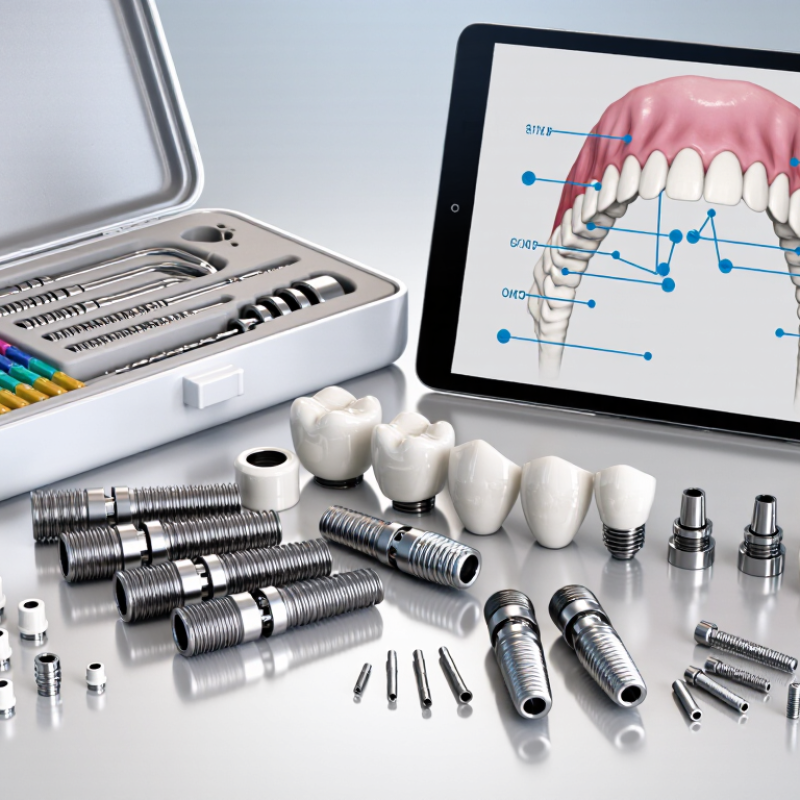
Bone-level tapered implant |
Commercially pure titanium Grade 4 or titanium alloy Grade 5; tapered body; internal conical or hexagonal connection; roughened or moderately roughened surface. |
Implantable dental devices generally require biological evaluation under ISO 10993, a documented quality system such as ISO 13485, and mechanical testing appropriate to the intended use. Long-term fatigue testing is commonly evaluated against ISO 14801. |
Approximately US$18–45 per implant, excluding instruments, packaging, freight, registration, and local taxes. |
Commonly 100–500 implants per size or mixed-size order, depending on customization and packaging. |
Approximately 15–35 working days for standard stock or repeat orders; longer for customized packaging or documentation. |
Suitable as the main volume product for private dental clinics, distributors, and multi-country procurement programs. Verify compatibility, lot traceability, and shelf-life policy before consolidation. |
| Core Implant Portfolio |
Tissue-level implant |
Polished transmucosal collar with an implant body designed for reduced soft-tissue manipulation and simplified restorative workflows. |
Clinical indications, collar dimensions, sterilization validation, and labeling must match the approved technical file and target-market requirements. Surface treatment and residual-contamination controls should be documented. |
Approximately US$22–55 per implant. |
Commonly 100–300 implants per size or mixed-size order. |
Approximately 20–40 working days. |
Useful where clinicians prefer a transmucosal design. Distribution partners should stock multiple collar heights and diameters to avoid incomplete treatment selections. |
| Specialized Implant Portfolio |
Short implant |
Reduced implant length, often approximately 4–8 mm, with a wider body or specific thread geometry intended for selected vertical bone limitations. |
Short implants require clear indications, contraindications, and mechanical evidence. Buyers should request fatigue data, connection strength data, and clinical-support documentation relevant to the exact design. |
Approximately US$25–60 per implant. |
Commonly 50–200 implants per size. |
Approximately 20–45 working days. |
Best handled as a specialist line rather than a high-volume commodity item. Product training and careful case-selection materials are important for distributors. |
| Specialized Implant Portfolio |
Narrow-diameter implant |
Commonly approximately 2.5–3.5 mm in diameter; used for selected narrow-ridge or limited-space indications according to the approved labeling. |
Mechanical strength, fatigue performance, risk analysis, and indication limits require particular attention because reduced diameter can affect fracture resistance. Regulatory classification depends on the destination market and intended use. |
Approximately US$20–50 per implant. |
Commonly 50–200 implants per size. |
Approximately 20–45 working days. |
May expand portfolio coverage but normally requires clinician education, surgical protocols, and tighter control of compatible restorative components. |
| Prosthetic Components |
Standard and angled abutments |
Titanium or titanium-alloy abutments; straight, angled, healing, temporary, multi-unit, and digital-scanbody options may be offered. |
Connection tolerances, torque recommendations, material certificates, surface finish, and compatibility statements should be controlled by part number. Do not assume interchangeability with another system solely because the connection appears similar. |
Approximately US$8–35 per abutment; customized components may cost more. |
Commonly 50–300 pieces per part number. |
Approximately 15–35 working days for standard parts; 25–50 working days for custom components. |
High-margin accessory category, but it creates inventory complexity. Distributors should use a controlled compatibility matrix and maintain critical torque-driver and screw inventory. |
| Digital Dentistry |
Digital workflow components |
Scan bodies, digital analogs, CAD/CAM titanium bases, laboratory analogs, and libraries for commonly used dental design software. |
Dimensional accuracy, software-library control, material traceability, and validated data exchange are important. Each digital component should be linked to the correct implant connection and revision-controlled library. |
Approximately US$10–45 per component; software-library access may be free or contract-based. |
Commonly 20–100 pieces per part number. |
Approximately 15–40 working days, depending on library validation and packaging. |
Attractive for laboratory and clinic channels. Buyers should confirm library availability, update responsibility, and compatibility with the target CAD/CAM ecosystem before launch. |
| Surgical Instruments |
Basic surgical kit |
Drills, depth gauges, parallel pins, drivers, torque wrench, ratchet, implant mounts, and sterilizable tray. |
Reusable instruments require cleaning, sterilization, usability, and material documentation. The supplier should provide validated instructions for use and define service or replacement intervals for drills and torque devices. |
Approximately US$180–650 per kit, depending on contents and automation level. |
Commonly 10–50 kits. |
Approximately 20–45 working days. |
Often bundled with initial implant orders or distributor starter packages. Replacement drills and drivers should be available locally or through a predictable replenishment program. |
| Regulatory Pathway |
China domestic registration |
Dental implants are generally treated as high-risk implantable medical devices in China and are commonly managed under Class III medical-device requirements. |
China market access normally involves National Medical Products Administration requirements, technical documentation, quality-system evidence, testing, labeling, and registration or filing procedures applicable to the exact product. |
Regulatory costs are project-specific and are not included in product unit prices. |
Not applicable. |
Often several months to more than one year, depending on testing, documentation, product changes, and review requirements. |
For export buyers, request the current registration status, product model list, certificate scope, manufacturing-site information, and consistency between certificates and shipped products. |
| Regulatory Pathway |
European Union market access |
Implantable dental products may fall under the EU Medical Device Regulation framework, with classification and conformity-assessment route determined by the exact intended purpose and device characteristics. |
Typical buyer checks include MDR technical documentation, clinical evaluation, post-market surveillance, UDI obligations where applicable, ISO 13485 certification, and a valid conformity route. CE marking alone should not be accepted without checking certificate scope and validity. |
Regulatory and authorized-representative costs are separate from product pricing. |
Not applicable. |
Commonly 6–18 months or longer for a new market-entry project, depending on the conformity route and readiness of the technical file. |
Use an authorized representative and importer structure that clearly assigns vigilance, complaint handling, recall, and registration responsibilities. |
| Regulatory Pathway |
United States market access |
Endosseous dental implants and related components may be regulated by the U.S. FDA under device classifications and product codes applicable to their intended use. |
Buyers should verify the applicable FDA listing, 510(k) status where required, labeling, biocompatibility evidence, sterilization information, and U.S. importer or establishment obligations. |
FDA submission, representative, testing, and compliance costs are separate from unit prices. |
Not applicable. |
Often 6–18 months or longer for a new product or new legal manufacturer, depending on submission complexity. |
Do not distribute before confirming that the exact model, manufacturing site, and intended use are covered by the relevant U.S. regulatory status. |
| Quality Assurance |
Material and surface documentation |
Common implant materials include commercially pure titanium and titanium alloys; surfaces may be machined, blasted, acid-etched, anodized, or otherwise treated. |
Request material certificates, chemical-composition records, surface-treatment specifications, roughness controls, cleaning validation, residual-contamination limits, and lot-level traceability. |
Usually included in the supplier qualification process rather than charged per unit. |
Not applicable. |
Typically 2–8 weeks for document review and sample qualification. |
Use approved samples and written specifications as the reference standard. Any change in alloy, surface treatment, packaging, or sterilization should trigger change-control review. |
| Quality Assurance |
Sterility and packaging |
Implants are commonly supplied sterile in validated barrier packaging with a stated shelf life; reusable instruments are generally supplied non-sterile unless otherwise specified. |
Verify sterilization method, validation standard, packaging integrity testing, expiration period, transport simulation, labeling language, and lot-release records. |
Sterile packaging may add approximately US$1–5 per implant compared with non-sterile supply, depending on volume and configuration. |
Commonly 100–500 sterile implants per packaging configuration. |
Approximately 20–45 working days for sterile production and release. |
Check whether packaging is suitable for the destination-market language and whether the remaining shelf life at shipment meets distributor requirements. |
| Commercial Model |
Private-label or OEM supply |
Buyer-controlled brand, artwork, labeling, packaging configuration, and potentially customized implant geometry or instruments. |
Legal-manufacturer responsibilities, technical-file ownership, change control, complaint handling, vigilance, and product-liability allocation must be defined in the contract. |
Unit prices may be 5%–25% higher than standard catalog supply when custom packaging, documentation, or engineering work is required. |
Commonly 500–2,000 implants per design or packaging configuration. |
Approximately 45–120 days for initial development; repeat orders may be 25–60 working days. |
Appropriate for established distributors with regulatory resources. Avoid private labeling until the destination-market registration and post-market responsibilities are contractually clear. |
| Distribution Strategy |
Authorized distributor model |
Regional distributor manages inventory, customer training, local promotion, complaint intake, and replenishment. |
Distribution agreements should define territory, product registration, storage conditions, traceability, adverse-event reporting, recalls, minimum service levels, and audit rights. |
Typical distributor gross-margin targets may range from approximately 25%–50%, depending on registration investment, training, inventory, and market competition. |
Commonly 500–3,000 implants for a regional launch, subject to market size. |
Initial launch planning commonly requires 2–6 months after regulatory readiness. |
Works best when the partner has dental-clinic relationships, regulatory capability, technical support, and a defined stock-replenishment plan. |
| Distribution Strategy |
Direct clinic or group-practice supply |
Supplier or importer sells directly to clinics, dental groups, hospitals, or purchasing organizations. |
Requires compliant local importer arrangements, product training, complaint handling, field support, and controlled product communication. |
May reduce intermediary margin but generally increases customer-service and training costs. |
Often 50–500 implants per purchasing account or replenishment cycle. |
Approximately 3–15 working days from local stock; international replenishment may take 15–45 working days. |
Suitable for focused markets with concentrated clinic networks. Local inventory is important for emergency cases and commonly used restorative components. |
| Buyer Due Diligence |
Pre-purchase qualification checklist |
Sample implants, prosthetic components, surgical kit, packaging samples, certificates, test reports, quality manual, and regulatory documents. |
Confirm exact model numbers, legal manufacturer, manufacturing site, certificate scope, ISO 13485 status, biocompatibility evidence, mechanical testing, sterilization validation, shelf life, and change-notification procedures. |
Sample and audit costs are normally negotiated separately; technical evaluation can range from several hundred to several thousand U.S. dollars. |
Usually 10–30 implants plus representative components and instruments for evaluation. |
Approximately 2–8 weeks for samples and initial document review. |
Use a written supplier-qualification scorecard and approve only the exact configurations intended for import and distribution. |